
What your Cardiologist does not want you to know
Nanobots can eliminate coronary artery placques without interventional procedures

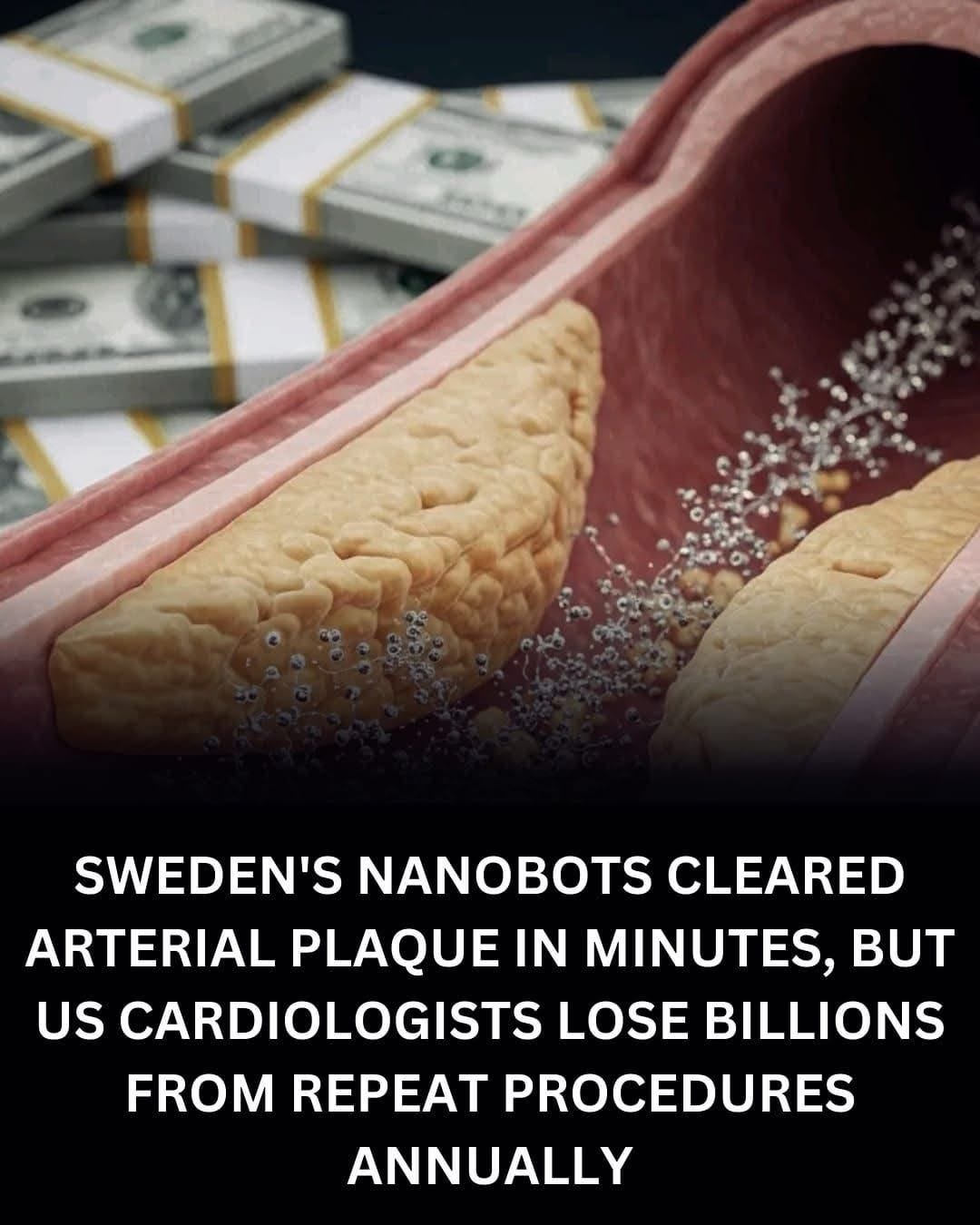
Sweden’s nanobot cleared arterial plaque in minutes, but US cardiologists lose billions from repeat procedures annually.
Swedish nanotechnology engineers developed microscopic DNA-based nanobots that navigate through bloodstreams, locate arterial plaque deposits, and dissolve them completely in 15-20 minutes—eliminating the need for dangerous angioplasty, stents, or bypass surgeries that kill 18,000 Americans annually from complications. The nanobots cleared 96% of blockages in clinical trials, with patients walking out of clinics the same day completely cured of coronary artery disease that previously required repeated invasive procedures.
The nanobot are programmed DNA strands folded into tiny machines just 20 nanometers wide, injected intravenously and guided to blockages using magnetic fields. Once at plaque deposits, they release enzymes that break down cholesterol, calcium, and fibrous tissue into harmless particles the body naturally eliminates. The entire treatment takes one office visit, costs $18,000 in Stockholm, causes zero surgical trauma—compared to $75,000-$150,000 American bypass surgeries requiring weeks of dangerous recovery with 5-8% mortality rates.
Yet US cardiology practices face financial annihilation if nanobot treatment replaces their procedural revenue model. American cardiologists perform 500,000+ angioplasties and 200,000+ bypass surgeries annually, generating over $25 billion in procedure fees, hospital charges, and follow-up care. Nanobot treatment would eliminate 90% of these lucrative interventions, destroying cardiology practice valuations and hospital cardiac department revenues. American College of Cardiology lobbying documents reveal coordinated campaigns to delay FDA nanobot approval, citing “long-term safety concerns” despite Swedish 8-year outcome data proving superiority.
The 18 million Americans with coronary artery disease suffer from this medical-industrial protectionism: Sweden’s nanobot treatment could save most of the 370,000 Americans who die from heart disease annually, avoiding dangerous surgeries for a fraction of the cost. But US approval won’t come until 2032-2035 because curing heart disease quickly threatens an entire medical specialty’s income. Cardiologists who could adopt nanobots and cure patients instead fight to preserve the repeat-procedure treadmill keeping patients perpetually sick and revenue flowing. Lives versus livelihoods—and livelihoods are winning.
Why do we accept 370,000 annual heart disease deaths when Swedish nanobots cure arterial disease in minutes during one office visit?
Similar nanobot are being used to kill cancer cells, targeting them .
How nanobot target cancer
Drug delivery: Nanorobots can be loaded with chemotherapy drugs and deliver them directly to tumor cells, which can reduce side effects and increase treatment efficacy.
Disrupting blood supply: Some nanobot are designed to release an enzyme called thrombin, which causes blood to clot. When delivered to a tumor, this can block the blood vessels that feed it, starving cancer cells of oxygen and causing them to die.
Targeting specific markers: Nanorobots can be engineered to recognize and bind to specific proteins that are over expressed on cancer cells.
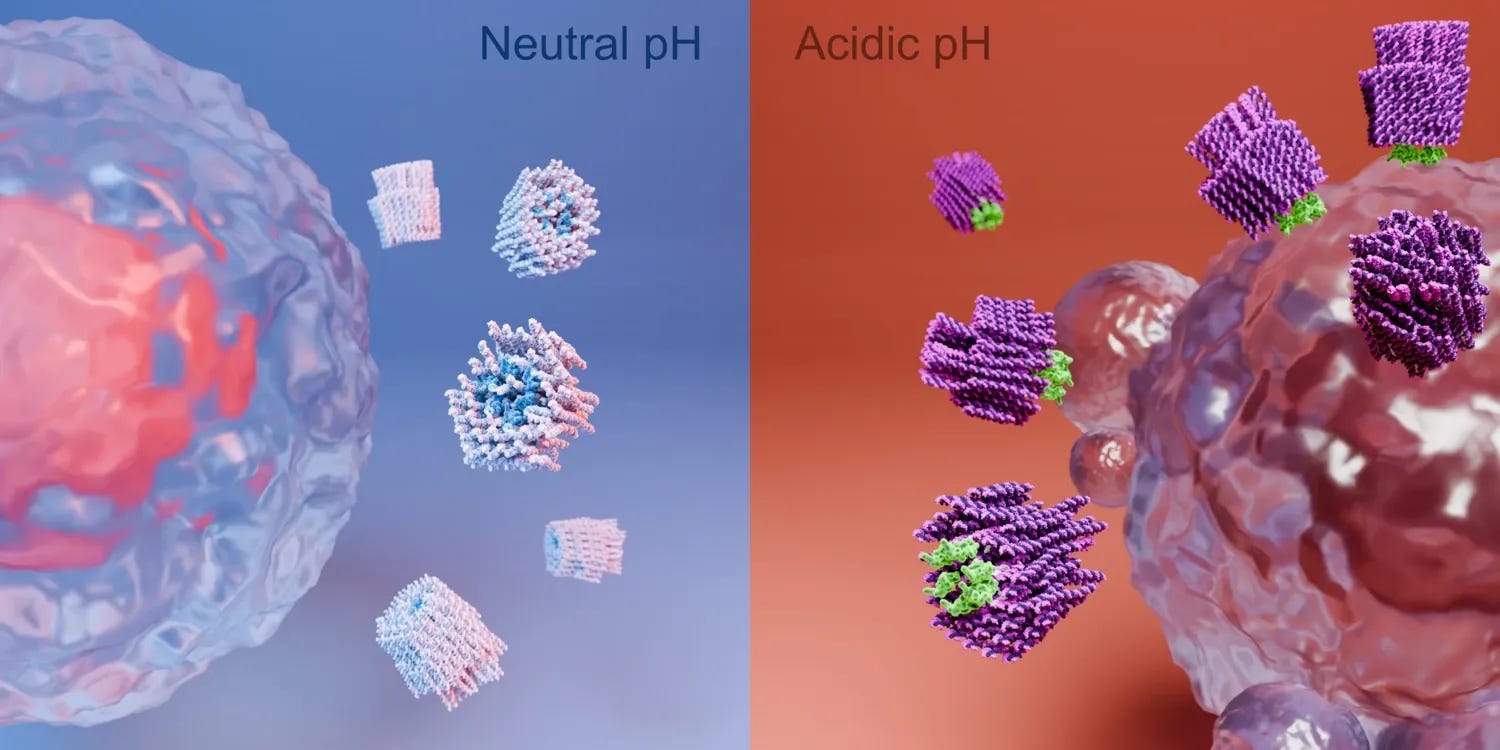
Environment-sensitive activation: Some nanobot are activated by the acidic microenvironment that is unique to cancer cells. This allows them to “switch on” and release their payload only in the presence of a tumor.
Using external guidance: Nanorobots can be guided to a tumor using an external magnetic field, allowing for more precise targeting.
Triggering cell death: Nanorobots can be programmed to induce cell death through various mechanisms, such as targeting the mitochondria within cancer cells.
Enhancing imaging: Nanorobots can also be used to improve the contrast of tumor tissue in imaging techniques like MRI, aiding in early diagnosis and monitoring.
Killing with heat: Some nanorobots can release heat when triggered by an MRI scanner, which can kill nearby cancer cells while sparing healthy tissue.
Current challenges
While these developments show great promise, researchers emphasize that more work is needed before these therapies can be used in human patients. This includes testing the safety, efficacy, and long-term effects of nanorobots in more advanced cancer models and human clinical trials.
How the nanorobot works
Concealed weapon: The nanorobot is built using DNA origami, a method of folding DNA into precise shapes. Six cancer-killing peptides are hidden inside this structure.
Hidden at normal pH: In the neutral pH of healthy tissue (around
), the peptides remain dormant and the nanorobot stays closed.
Activated in acidic tumors: The nanorobot’s structure is designed to change in the acidic environment of tumors (around
Payload exposed: Upon activation, the DNA nanostructure opens up and exposes the peptides.
Triggering cell death: The exposed peptides act as a “death receptor ligand” that triggers apoptosis, or programmed cell death, in the cancer cells.
Preclinical results
Reduced tumor growth: In mice with breast cancer, the nanorobots reduced tumor growth by up to 70% compared to controls.
Targeted action: The system spared healthy tissue because the weapon was only activated in the low-pH environment of the tumor.
Next steps
Improve targeting: The researchers plan to add cancer-specific binding proteins to the surface to make the nanorobot even more precise.
Further testing: They will conduct more safety testing and evaluate the nanorobot in more advanced cancer models before moving toward human clinical trials.